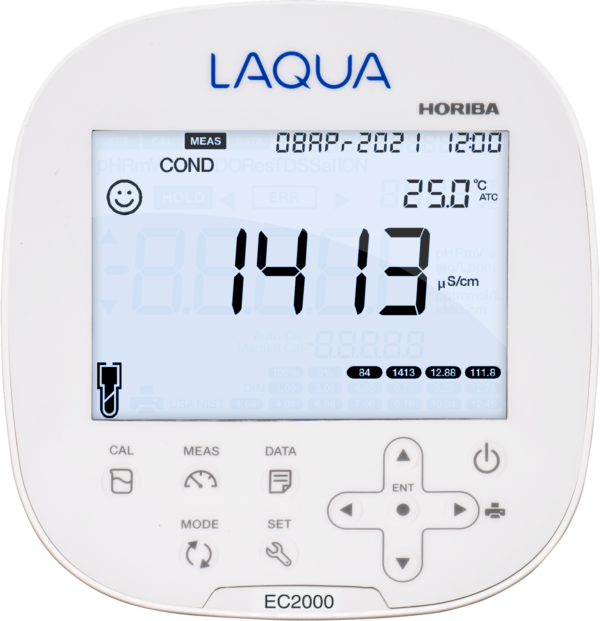

Field testing rarely happens under laboratory conditions. Samples are small, sites are remote, and decisions often need to be made on the spot rather than days later. The HORIBA LAQUAtwin range is built for exactly this situation, putting laboratory-grade measurement into an instrument that fits in a pocket.
This guide explains how LAQUAtwin meters work, what each model measures, and how to select the right one for your application.
What is a LAQUAtwin pocket meter?
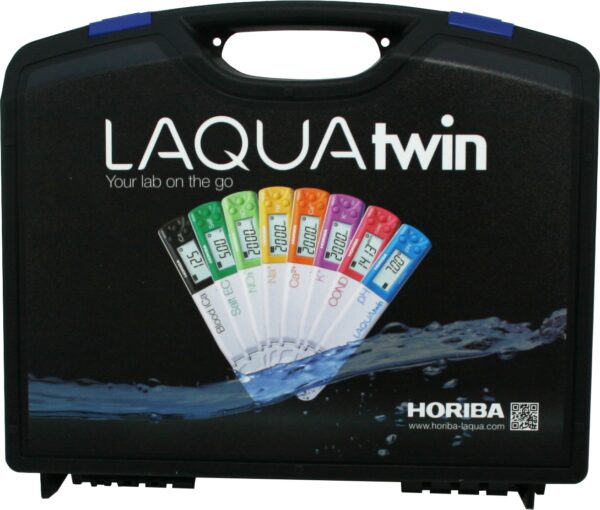
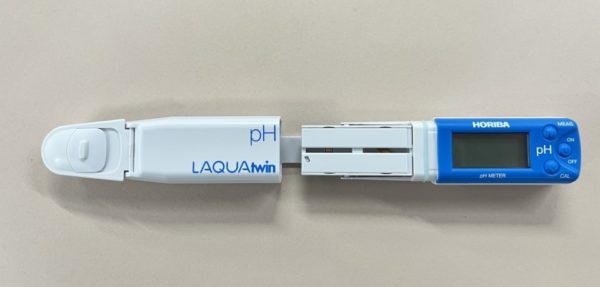
A LAQUAtwin meter is a compact, handheld instrument that measures pH, conductivity or a specific ion from a small sample placed directly onto a flat sensor. The range is built on more than 60 years of HORIBA sensor engineering and is the only pocket-type series that measures specific ions directly using Ion Selective Electrode (ISE) technology. Across the range there are 11 models covering over seven water quality parameters.
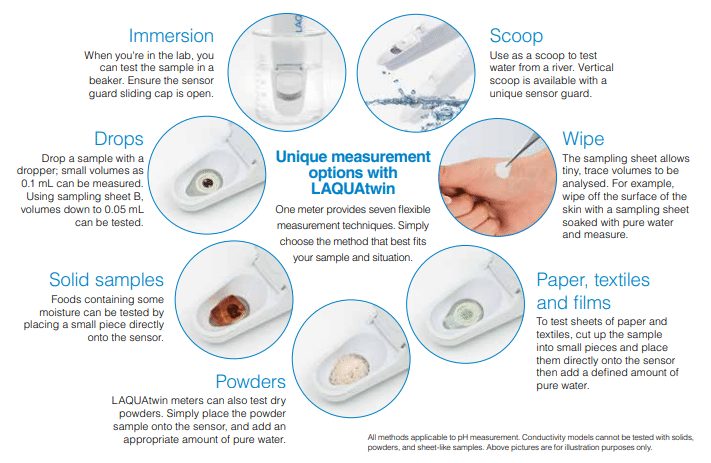
Measurements can be taken from a drop rather than full immersion. The LAQUAtwin handles sample types that conventional pocket meters struggle with, including viscous liquids, damp solids, plant sap, powders and textiles. Sample volumes range from 0.3 mL down to 0.05 mL when the supplied sampling sheet is used.
How does flat sensor technology work? 
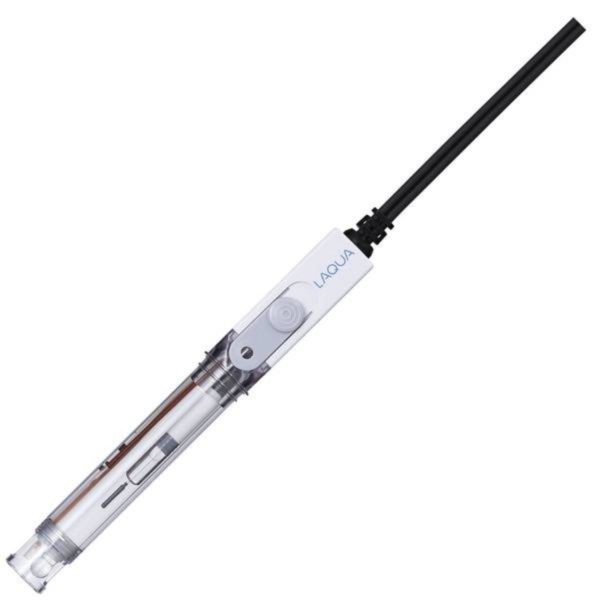
At the centre of every LAQUAtwin meter is an ultra-thin flat sensor. This HORIBA innovation combines the electrode, the reference system and the sample interface on a single chip less than one millimetre thick.
Conventional pocket meters require the probe tip to be fully submerged, which forces larger sample volumes and makes solids or pastes difficult to test. The flat sensor removes that constraint. A few drops are placed on the sensor surface and the reading is taken immediately, with the integrated sample area meaning fewer steps and less equipment to carry into the field.
Six sampling methods are supported across the range: drops, immersion, scooping, wiping, pressing, and the sampling sheet. Between them they cover almost any sample type, from clear liquids through to soil pastes and plant tissue.
What can a LAQUAtwin meter measure?
The range divides into general water quality parameters and ion-specific measurement. The table below summarises the most commonly specified models and their typical use.
Model |
Measures |
Typical application |
|---|---|---|
pH-11 |
pH |
Hydroponics, aquaculture, environmental monitoring, fermentation control |
EC-11 |
Conductivity |
Nutrient solution strength, salinity screening, general water quality |
Salt-11 |
Salt (sodium chloride) |
Sodium monitoring in sauces, processed and fermented foods |
NO3-11 |
Nitrate ion |
Plant sap analysis and fertiliser decisions in the field |
K-11 |
Potassium ion |
Crop nutrient status for agronomy and growing |
Ca-11 |
Calcium ion |
Calcium-sensitive crops and nutrient management |
F-11 |
Fluoride ion |
Onsite environmental compliance and wastewater screening |
The full lineup, including ion-specific models beyond those listed above, is available on the LAQUAtwin compact meters page. For the ion-selective measurement that distinguishes this range, see the ion selective electrodes category.
Field applications by industry
The value of a pocket meter is the ability to measure where the sample is, rather than transporting it back to a bench. The applications below are drawn from HORIBA field methods, with worked examples available in our application notes library.
Agriculture and crop management 

The NO3-11 (Nitrate) and K-11 (Potassium) meters allow agronomists and growers to assess plant nutrient status directly in the field. Rather than waiting days for laboratory results, fertiliser decisions can be made the same day based on what the crop is actually taking up. Adding the Ca-11 covers calcium-sensitive crops.
Food production
The Salt-11 quantifies salt levels in sauces, processed foods and fermented products. The workflow is simple: dilute the sample, place a drop on the sensor, and read the result. For processors managing quality control and sodium labelling, this provides a practical alternative to sending every batch away for analysis. The pH-11 supports fermentation control and quality assurance in the same settings.
Environmental and industrial compliance

The F-11 fluoride meter provides reliable onsite analysis for environmental compliance. For operations working to discharge limits, rapid screening helps identify problems before they become costly violations. pH and conductivity screening with the pH-11 and EC-11 supports routine river, bore and process water monitoring.
When should you use a pocket meter instead of a laboratory?
For routine measurement, LAQUAtwin meters offer clear advantages over sending samples to a laboratory: results in seconds, minimal sample volume, no transport or turnaround delay, and the ability to test at the point of interest.
Pocket meters do not replace laboratory analysis entirely. Regulatory reporting, referee testing and complex sample matrices still call for accredited laboratory methods. The practical division is straightforward. Use a LAQUAtwin for routine monitoring, screening and real-time decisions, and reserve laboratory analysis for work that requires accredited results. Used this way, a pocket meter handles testing that would otherwise be delayed or skipped altogether.
Where a survey needs several parameters from a single reading, such as turbidity, dissolved oxygen and depth alongside pH and conductivity, a multiparameter instrument is the better fit. See the U-50 Series multiparameter meters or the portable meters range for those applications.
Calibration and maintenance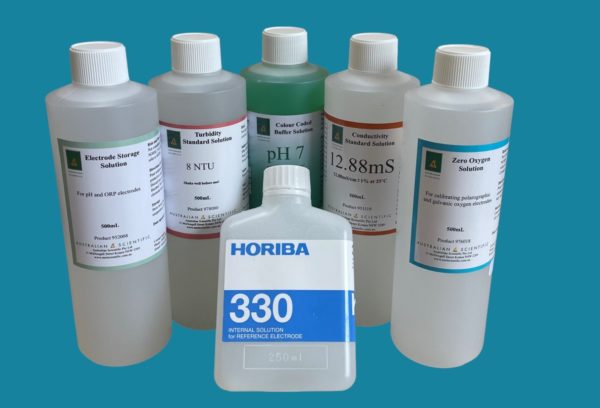
Accurate results depend on proper calibration and sensor care. The auto-calibration function recognises standard solutions automatically, so calibration requires only a few drops of standard and a single press. Two-point calibration is available where additional accuracy is needed.
As a general rule, calibrate daily for critical measurements and weekly for routine screening. We stock the full range of HORIBA calibration solutions and LAQUAtwin replacement sensors and accessories to keep instruments in service.
How to choose the right LAQUAtwin model
The right model depends on what you need to measure:
- General water quality screening. The pH-11 and EC-11 cover the most common parameters for hydroponics, aquaculture and environmental monitoring.
- Agriculture and crop management. The NO3-11 and K-11 enable plant sap analysis for fertiliser decisions, with the Ca-11 added for calcium-sensitive crops.
- Food production. The Salt-11 handles sodium monitoring in processed foods, while the pH-11 supports fermentation and quality assurance.
- Industrial and environmental compliance. The F-11 fluoride meter meets a regulatory measurement requirement that few portable instruments can address.
Frequently asked questions
What sample size does a LAQUAtwin meter need?
A LAQUAtwin measures from as little as 0.3 mL placed on the flat sensor, and from 0.05 mL when the supplied sampling sheet is used. This makes it suitable for limited or precious samples that immersion-style meters cannot test.
Can LAQUAtwin meters test solids and pastes?
Yes. The flat sensor and the range of sampling methods allow measurement of damp solids, powders, plant sap, pastes and textiles, not only liquids.
How often should a LAQUAtwin be calibrated?
Calibrate daily for critical measurements and weekly for routine screening. The meter recognises standard solutions automatically, so calibration takes only a few seconds.
Do pocket meters replace laboratory testing?
No. They are intended for routine monitoring, screening and real-time field decisions. Accredited laboratory methods remain necessary for regulatory reporting, referee testing and complex sample matrices.
Talk to a water quality specialist
Browse the LAQUAtwin compact meters range or contact our team on 1800 021 083 for advice.